
The Brown Family and Disease
A History of the Vampire in Popular CultureThis thread traces the New England vampire panic through repeated tuberculosis deaths, exhumation, failed treatment, and retrospective explanation.
increasing Bearing strength in each event
 decreasing
Bearing strength in each eventdecreasingHousehold Losses
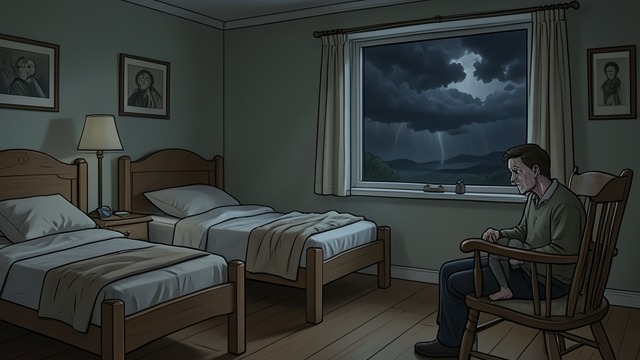
Household Losses
Tuberculosis Strikes
The Brown family loses several members over successive years. Repeated deaths make ordinary disease appear like an intentional attack from beyond the grave.
Fear of Continuation
As illness reaches the surviving children, neighbors seek a cause that can explain why the household continues to suffer.
Mercy’s Death
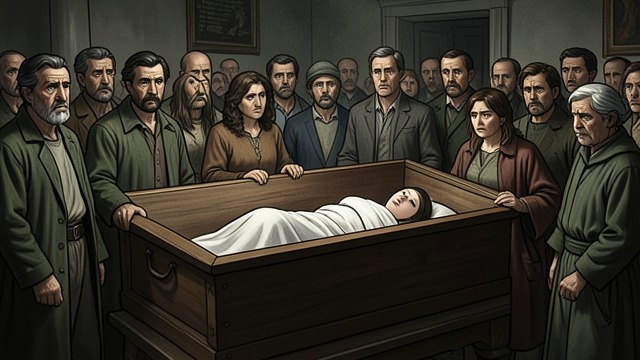
Mercy’s Death
The Final Victim
Mercy Brown dies after her relatives and neighbors have already watched tuberculosis consume the family. Her death becomes the focus of communal suspicion.
Cold Preservation
The season and burial conditions slow decomposition. What looks like supernatural freshness is a predictable physical circumstance, but fear has already chosen its interpretation.
Medical Objection

Medical Objection
Evidence of Disease
A doctor identifies signs of tuberculosis in Mercy’s lungs and explains why her body has not decayed. His reasoning is medically coherent but socially powerless.
Authority Rejected
The community prefers a supernatural explanation because it offers an enemy. Expertise loses to collective conviction when fear promises a more satisfying story.
Burning the Organs
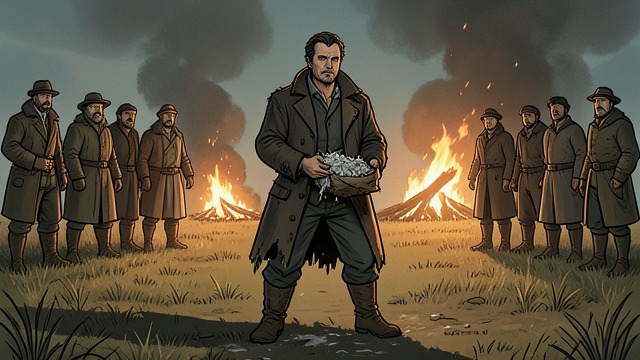
Burning the Organs
Protective Ritual
Mercy’s heart and lungs are removed and burned. The ashes are mixed with water and given to Edwin as an attempted cure.
Ritual Failure
The treatment cannot stop the disease. Its failure exposes the tragic distance between symbolic control and biological reality.
Posthumous Explanation
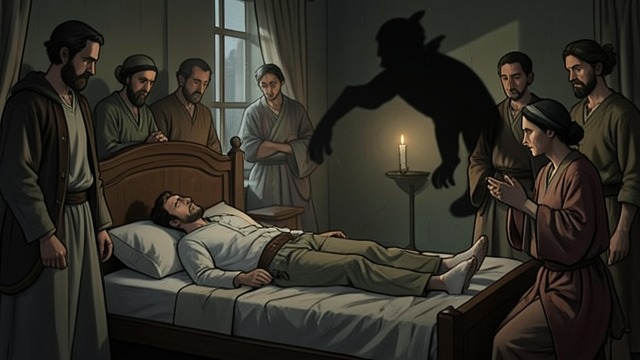
Posthumous Explanation
Edwin’s Death
Edwin dies despite the ritual. The vampire theory has failed to protect the family, but it remains emotionally more powerful than the medical explanation.
Fear as Narrative
The incident demonstrates how communities convert epidemic loss into a moral and supernatural drama. The supposed vampire is a vessel for helplessness.
1883 to 1891
January 1892
after Mercy’s exhumation
early 1892
after 2 May 1892
